

Introduction
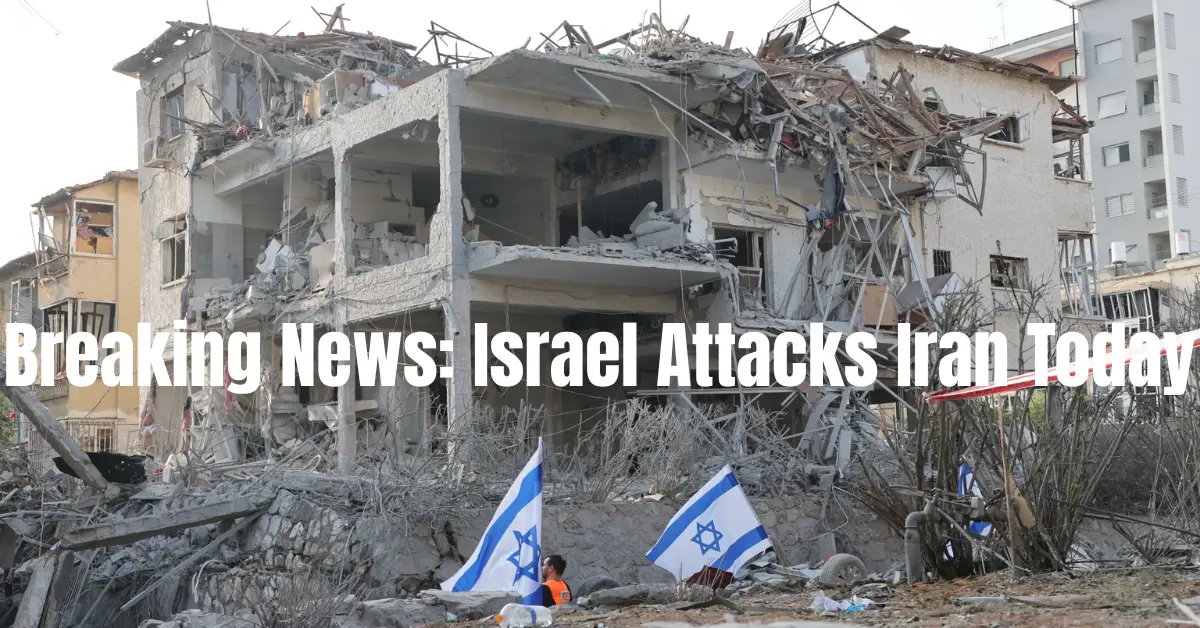
In breaking news Israel attacks Iran today, marking one of the most significant escalations in Middle East tensions in recent years. According to early reports, Israeli forces have launched coordinated airstrikes targeting key Iranian military and nuclear facilities. The assault, which began in the early hours of Thursday, has already drawn sharp reactions from Tehran and global powers, raising fears of a wider regional conflict.
This latest development underscores the fragile balance in the Middle East, where long-simmering hostilities between Israel and Iran continue to threaten regional stability and global energy markets. As both nations exchange warnings and prepare for possible retaliation, the world watches closely to see whether diplomacy or conflict will shape the hours ahead.
What Happened: Timeline of Events
In the early hours of Thursday morning, multiple explosions were reported across several Iranian cities, including Isfahan, Tehran, and Shiraz, as Israeli aircraft allegedly carried out precision airstrikes on suspected missile bases and nuclear research sites. The operation, described by Israeli media as a “defensive pre-emptive strike,” marks a dramatic new phase in the long-standing Israel-Iran conflict.
According to regional sources, the first wave of strikes targeted Iranian air defense systems near Isfahan, followed by attacks on command centers believed to be coordinating drone and missile programs. Within minutes, air raid sirens were heard in multiple Iranian provinces, and state media confirmed “foreign aggression” had taken place.
By mid-morning, Iran’s Revolutionary Guard Corps (IRGC) claimed to have intercepted several incoming Israeli missiles and vowed a “strong and immediate response.” Israeli officials have neither confirmed nor denied responsibility but emphasized that Israel “will not tolerate existential threats.”
Witnesses in Iran reported widespread internet disruptions and power outages in affected regions, as emergency teams rushed to the scene. Satellite imagery and early footage shared on social platforms show rising plumes of smoke and damaged infrastructure, although the exact extent of casualties and damage remains unclear.
This breaking news Israel attacks Iran today has already prompted emergency meetings among world leaders and the United Nations Security Council, signaling a potentially dangerous turning point in Middle Eastern geopolitics.
Background Context: The Israel–Iran Conflict and Rising Tensions
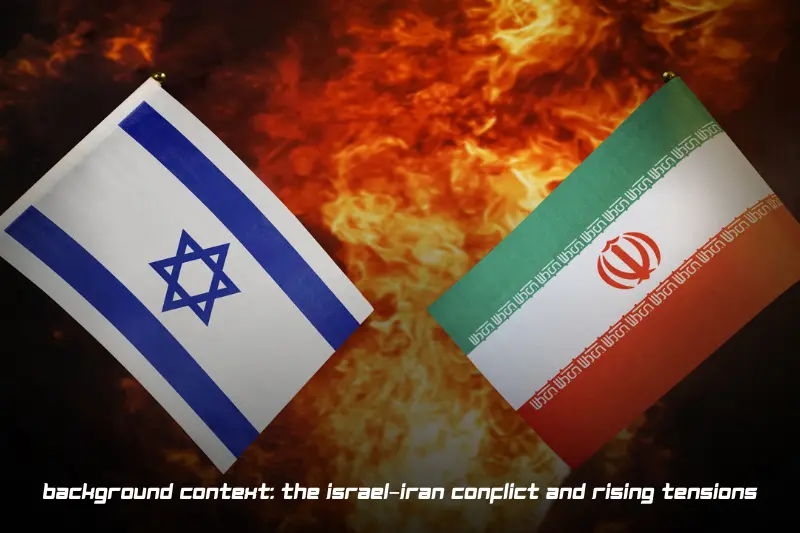
The Israel–Iran conflict has been simmering beneath the surface for decades, shaped by ideological rivalry, regional influence, and nuclear ambitions. While the two nations have never engaged in a full-scale war, their shadow conflict has played out across Syria, Lebanon, and the Persian Gulf — through proxy militias, cyberattacks, and covert operations.
Tensions intensified in recent years as Israel accused Iran of developing nuclear weapons under the guise of civilian research. Israel has repeatedly stated that it would take “any necessary action” to prevent Iran from acquiring a nuclear bomb. Meanwhile, Iran insists its nuclear program is peaceful and meant for energy production, accusing Israel of aggression and espionage.
This latest escalation in the Middle East follows months of rising hostilities. In the weeks leading up to today’s strikes, Israeli intelligence allegedly detected an uptick in Iranian drone and missile deployments near the Syrian border. Several small-scale skirmishes and cyber incidents hinted at the growing risk of direct confrontation.
Observers describe today’s Israel attacks Iran operation as the most overt military action between the two powers to date — a move that could transform the regional balance of power. Analysts warn that the Israel–Iran conflict update signals not only a bilateral standoff but also a potential Middle East-wide escalation, drawing in allies and adversaries from across the region.
As the breaking news Israel attacks Iran today continues to unfold, diplomatic channels are under immense pressure to prevent further escalation and contain what could become one of the most dangerous confrontations in recent history.
Key Targets & Strategic Impact
Initial reports indicate that Israel’s overnight operation focused on strategic military and nuclear-related sites deep inside Iranian territory. Among the primary targets were air-defense batteries near Isfahan, radar installations around Natanz, and several storage depots believed to house ballistic-missile components. Unconfirmed satellite images show scorch marks and structural damage at some of these facilities, suggesting the strikes were aimed at crippling Iran’s missile-launch capabilities.
Security analysts note that the Israeli airstrike on Iran’s nuclear facilities appears calibrated rather than indiscriminate. By hitting radar systems, command nodes, and logistical hubs, Israel seems intent on disrupting Iran’s retaliatory capacity while sending a warning that any move toward weaponizing its nuclear program will invite further action.
Iranian state outlets insist that critical nuclear infrastructure remains intact and that Israel’s strikes caused only limited damage. However, independent observers believe the psychological and diplomatic effects could be far greater. The attack underscores Israel’s readiness to act unilaterally and exposes vulnerabilities in Iran’s air-defense network.
Strategically, this marks a major inflection point in the Israel–Iran conflict update. It demonstrates Israel’s ability to project power hundreds of miles beyond its borders and raises fears that Iran may retaliate through proxy forces in Lebanon, Syria, or Iraq. If confirmed, today’s Israel attacks Iran operation could redefine deterrence dynamics in the region and heighten the risk of a broader confrontation involving multiple states.
Iran’s Retaliation and Possible Next Moves
Within hours of the reported Israel strikes on Iran, Tehran vowed a “decisive and proportional response.” Statements from the Islamic Revolutionary Guard Corps (IRGC) condemned the attacks as a violation of Iranian sovereignty and promised that Israel would “bear the consequences.”
Early security bulletins indicated that Iran placed several missile units on heightened alert and mobilized air-defense forces across its western provinces. While no confirmed counter-attack had been launched as of press time, intelligence sources said that Iran’s missile brigades and drone divisions were preparing for potential retaliatory operations targeting Israeli or allied assets in the region.
Analysts warn that a direct Iran retaliation against Israel could trigger an unpredictable chain reaction. Iran may choose to respond indirectly through proxy groups such as Hezbollah in Lebanon or militias in Syria and Iraq, rather than engage Israel head-on. Cyber-operations and covert strikes on Israeli or Western interests could also form part of Tehran’s playbook, allowing it to send a message without escalating into open war.
Regional observers stress that the next 24 to 48 hours are critical. If Iran missile attacks Israel or Israeli positions abroad, the confrontation could spiral into a regional war Israel Iran, drawing in U.S. bases in the Gulf and threatening global oil shipping lanes.
At the same time, diplomatic channels remain active: envoys from Qatar, Oman, and the United Nations are reportedly pressing both sides to exercise restraint and open back-door talks.
For now, the situation remains fluid and tense. Whether this turns into a broader Israel–Iran conflict escalation or a contained military exchange will depend on how Tehran calibrates its next move and how Israel interprets it.
Regional & Global Implications
The breaking news Israel attacks Iran today has sent shockwaves through capitals across the Middle East and beyond. Within hours of the reports, several governments convened emergency meetings to assess the potential fallout from what could become the most serious Middle East escalation Israel Iran in decades.
In Washington, U.S. officials called for “maximum restraint,” emphasizing that diplomacy remains the only path to regional stability. The European Union urged both sides to avoid further violence, while Russia and China criticized the airstrikes as “destabilizing acts” that could ignite a wider conflict.
Across the Gulf, nations such as Saudi Arabia, Qatar, and the United Arab Emirates are monitoring developments closely, fearing disruptions to vital energy corridors and oil exports. Any prolonged fighting between Israel and Iran could send global oil prices soaring and threaten the fragile recovery of the international economy.
Regional analysts warn that a sustained confrontation could draw in multiple state and non-state actors, turning proxy tensions into a full-scale regional war Israel Iran scenario. Israel’s neighbors, including Lebanon and Syria, could become launchpads for retaliation, while U.S. bases in the Gulf may also be viewed as potential targets.
At the diplomatic level, the United Nations Security Council is expected to hold an emergency session to discuss de-escalation measures and humanitarian safeguards. The global community faces a difficult balancing act — supporting security in the region while preventing the Israel Iran war news from evolving into a prolonged international crisis.
Financial markets have already reacted to the uncertainty, with energy and defense stocks rising sharply. The attack underscores how any confrontation between Israel and Iran resonates far beyond the battlefield — reshaping alliances, energy flows, and geopolitical calculations from Tehran to Washington.
Expert Opinions & Analysis
Analysts describe the Israel–Iran conflict update as a watershed moment that could reshape the strategic landscape of the Middle East. Military experts note that the precision and depth of the Israel strikes on Iran demonstrate a high level of intelligence coordination and long-range operational planning — capabilities that Israel has refined over years of confronting regional threats.
According to Middle East defense analysts, Israel’s decision to strike inside Iran proper — rather than limiting operations to proxy territories like Syria or Lebanon — signals a major shift in doctrine. “This is not a shadow war anymore,” one regional observer commented. “It’s a declaration that Israel is ready to act overtly if it believes Iran is crossing red lines.”
Strategic scholars warn, however, that the political costs could outweigh the military gains. Iran is likely to exploit the attack to rally domestic support, strengthen alliances with Russia and China, and portray Israel as an aggressor before the United Nations Security Council. If mismanaged, the incident could intensify polarization across the Muslim world and complicate Washington’s diplomatic balancing act.
Economic experts highlight a parallel concern: sustained regional escalation in the Middle East could disrupt global trade routes and energy supplies. Oil prices have already shown volatility, while investors brace for a potential spike in defense spending among regional powers.
Despite the tension, some analysts believe there is still room for de-escalation. Back-channel diplomacy, especially through Qatar and Oman, might offer both sides a face-saving way to step back from open war. For now, experts agree that the coming days will determine whether the breaking news Israel attacks Iran today marks the beginning of a broader conflict or a limited strike aimed at deterrence.
Possible Scenarios Ahead
As the situation develops, experts and officials around the world are outlining several possible trajectories for the Israel–Iran conflict following today’s events. The next few days will be critical in determining whether the region moves toward de-escalation or spirals into a prolonged confrontation.
Controlled Retaliation and De-escalation
In the best-case scenario, both Israel and Iran engage in limited, symbolic actions to save face without crossing red lines. Iran may launch a restrained cyber or drone response, while Israel pauses further strikes under diplomatic pressure from global powers. This would allow regional actors like Qatar, Oman, and Turkey to mediate behind the scenes and prevent a broader conflict. Such a path could stabilize markets and restore fragile communication channels between Tehran, Washington, and Tel Aviv.
Escalation Through Proxy Forces
A more likely near-term outcome involves proxy warfare. Iran could mobilize allied militias such as Hezbollah, Kata’ib Hezbollah, or Houthis to target Israeli or Western assets indirectly. These deniable attacks could lead to an extended regional conflict, straining borders from Lebanon to Yemen and intensifying the Middle East escalation Israel Iran dynamic.
Direct Military Confrontation
The worst-case scenario would see Iran missile attacks on Israel or Israeli counterstrikes leading to sustained open warfare. This could evolve into a regional war Israel Iran, potentially involving U.S. and Gulf forces. Such a confrontation would have devastating humanitarian and economic consequences, disrupt oil exports, and destabilize global security structures.
Diplomatic Breakthrough
Though unlikely amid the current tensions, an emergency UN-mediated ceasefire or backchannel dialogue could still halt further attacks. Some observers believe both sides may eventually realize that prolonged warfare would be mutually destructive and unsustainable. This could open a window for renewed nuclear negotiations and deconfliction agreements.
Whatever course unfolds, today’s breaking news Israel attacks Iran today marks a defining moment for the region. The balance between deterrence and escalation has never been more fragile, and the choices made in the coming hours may shape the Middle East’s geopolitical order for decades to come.
Conclusion
As the world closely follows breaking news Israel attacks Iran today, uncertainty looms over how this dramatic turn of events will reshape the Middle East. What began as a single night of airstrikes has already evolved into a test of strength, strategy, and diplomacy between two long-standing rivals.
Both nations now stand at a crossroads: Israel has demonstrated its willingness to act decisively against perceived threats, while Iran faces the challenge of formulating a response that satisfies domestic demands without triggering a catastrophic regional war Israel Iran. The coming hours and days will reveal whether restraint or retaliation defines the next chapter of this unfolding crisis.
For global observers, this moment underscores the volatility of regional politics and the urgent need for renewed diplomatic engagement. As analysts warn of the potential for further Middle East escalation Israel Iran, one truth remains clear — peace and stability in the region are fragile, and the consequences of miscalculation could be felt far beyond its borders.
Stay tuned for continuous Israel–Iran conflict updates as this story develops and the world watches for signs of either reconciliation or renewed confrontation.
