

Introduction
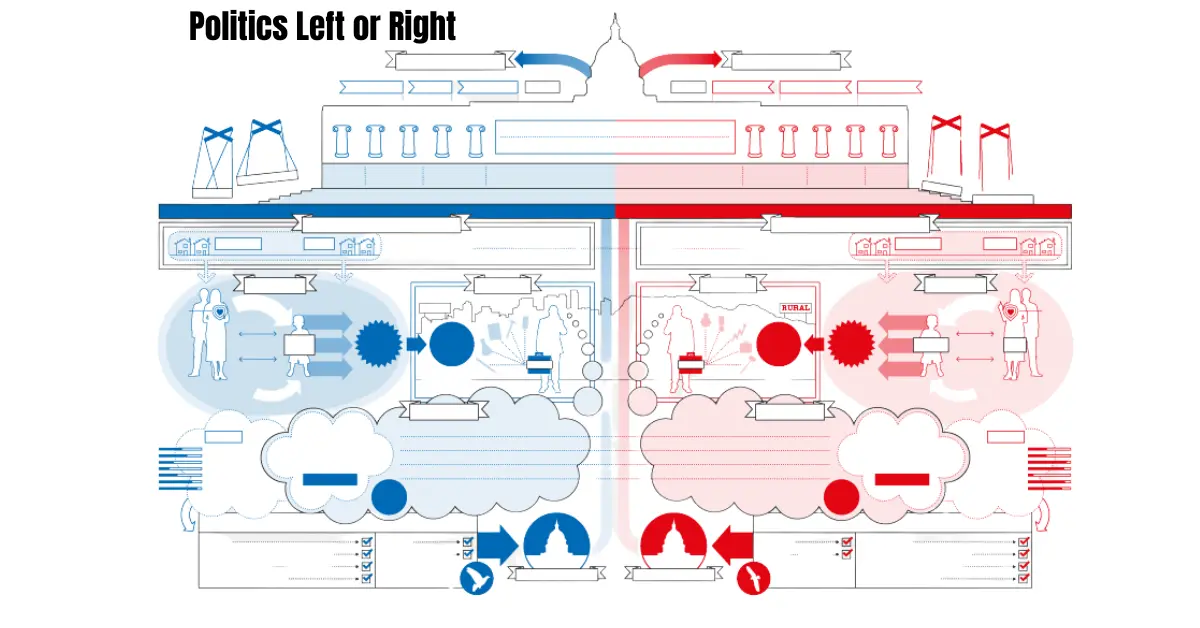
In today’s fast-changing world, many people often ask: “politics left or right – what does it really mean?” Understanding the difference between left and right in politics is more than just a debate; it’s essential for making sense of policies, elections, and political movements. Whether you’re discussing government roles, social issues, or economic policies, knowing where different ideologies fall on the political spectrum helps you make informed decisions.
In this article, we’ll break down the concepts of left-wing and right-wing politics, explore their key differences, and explain where major parties like Republicans and Democrats fit. By the end, you’ll have a clear understanding of politics left or right and why it matters in today’s world.
What is Left and Right in Politics?
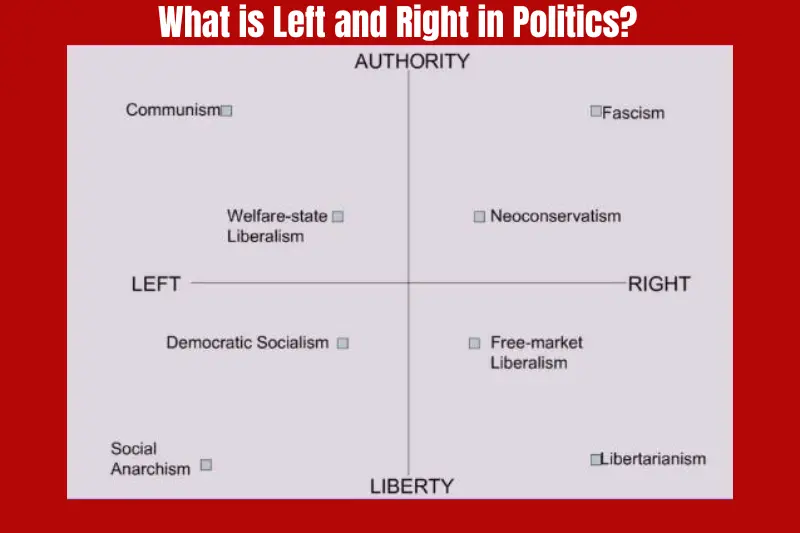
The terms left and right in politics have been around for centuries, originating from the French Revolution when members of the National Assembly sat on opposite sides based on their political views. Over time, these terms came to represent two broad ideologies:
- Left-wing politics generally focus on social equality, government intervention in the economy, and progressive social policies. Left-leaning individuals often advocate for policies that aim to reduce inequality and protect marginalized groups.
- Right-wing politics, on the other hand, prioritize tradition, limited government intervention, free-market economics, and individual responsibility. Right-leaning individuals often emphasize personal freedom, national identity, and preserving established social structures.
Understanding what is left and right in politics is crucial because it helps voters, students, and citizens navigate political debates, evaluate policies, and identify where parties and politicians stand. Today, these distinctions shape everything from taxation and healthcare to education and foreign policy.
By grasping these fundamental ideas, you’ll be better equipped to understand discussions about left wing vs right wing or right-wing vs left-wing politics.
Left Wing vs Right Wing: Key Differences
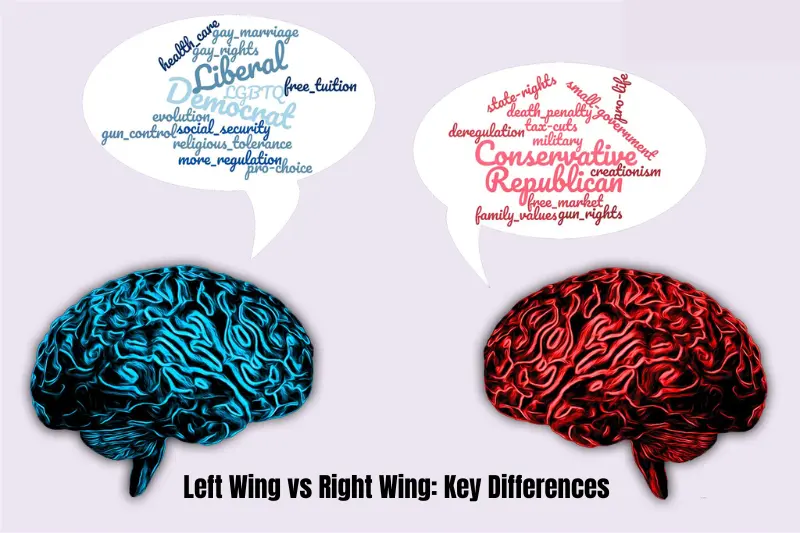
Understanding the left wing vs right wing divide is essential to grasping modern politics. While both sides aim to improve society, they differ in philosophy, priorities, and approach to governance.
Left Wing
- Core Beliefs: Equality, social justice, and government involvement in the economy.
- Economic Policies: Support for higher taxes on the wealthy, welfare programs, and regulations to reduce income inequality.
- Social Policies: Emphasis on civil rights, environmental protection, and progressive reforms.
- Examples: Democratic Party in the U.S., Labour Party in the U.K., Social Democratic parties in Europe.
Right Wing
- Core Beliefs: Tradition, personal responsibility, and limited government intervention.
- Economic Policies: Free-market capitalism, lower taxes, and minimal regulation.
- Social Policies: Emphasis on law and order, national identity, and conservative social values.
- Examples: Republican Party in the U.S., Conservative Party in the U.K., various nationalist parties worldwide.
Comparison Table: Right Wing vs Left Wing
| Aspect | Left Wing | Right Wing |
|---|---|---|
| Philosophy | Equality, progressivism | Tradition, conservatism |
| Government Role | Active, interventionist | Limited, laissez-faire |
| Economic Policy | Wealth redistribution, welfare | Free-market, lower taxes |
| Social Policy | Civil rights, environmentalism | Law & order, national identity |
| Common Parties/Movements | Democrats, Labour, Social Democrats | Republicans, Conservatives, Nationalists |
By understanding the right wing vs left-wing or right wing vs left wing distinctions, it becomes easier to follow debates, political news, and policy decisions. This knowledge also helps clarify questions like “are Republicans left or right?”, which we’ll explore in the next section.
Are Republicans Left or Right?
Many people wonder, “are Republicans left or right?” The answer is that the Republican Party is generally considered right-wing in American politics. This means they tend to support:
- Limited government intervention in the economy
- Lower taxes and free-market principles
- Conservative social policies focused on tradition and family values
- Strong national defense and law enforcement policies
In contrast, the Democratic Party leans left-wing, supporting more government involvement in social programs, progressive taxation, and policies aimed at reducing social inequality.
Understanding where major parties like Republicans and Democrats fall on the political spectrum makes it easier to interpret news, policy debates, and election outcomes. It also clarifies the real-world meaning behind the broader question of politics left or right.
How to Identify Left or Right Politics Today
Understanding whether a person, party, or policy is left or right in politics can seem tricky, but there are clear indicators that make it easier:
Economic Policies
- Left-wing: Supports government intervention, welfare programs, progressive taxation, and efforts to reduce income inequality.
- Right-wing: Advocates for free markets, lower taxes, and minimal regulation, emphasizing personal responsibility.
Social Policies
- Left-wing: Promotes civil rights, gender equality, environmental protection, and progressive reforms.
- Right-wing: Emphasizes tradition, national identity, law and order, and conservative social values.
Political Rhetoric and Party Alignment
- Observe how parties position themselves: Democratic parties are generally left-leaning, while Republican and Conservative parties are right-leaning.
- Look at politicians’ speeches, campaigns, and manifestos to understand their alignment.
Real-World Examples
- Left-wing: Advocating for universal healthcare, climate change policies, and social equity programs.
- Right-wing: Pushing for tax cuts, deregulation, stricter immigration laws, and traditional family values.
By paying attention to economic approaches, social stances, and party alignment, anyone can better identify left wing vs right wing tendencies. This knowledge helps demystify debates about right-wing vs left-wing politics and empowers informed voting and discussion.
Common Misconceptions About Left and Right Politics
Even with a basic understanding of politics left or right, many myths and misunderstandings persist. Clearing them up helps people engage in political discussions more effectively.
Left-wing means anti-business, right-wing means anti-government
While left-wing policies often favor more regulation, they are not inherently “anti-business.” Similarly, right-wing policies do not reject all government involvement—they usually support it in areas like defense and law enforcement.
All Democrats are left-wing, all Republicans are right-wing
Political alignment is not absolute. Parties can have members with varying degrees of left or right views, and some politicians take centrist positions.
Left and right are the same worldwide
Political ideologies can vary by country. For example, a “right-wing” party in one country may have policies that seem left-leaning in another. Understanding local context is key.
Left-wing vs right-wing is only about economics
Politics is about more than taxes and government spending. Social issues, civil rights, environmental policy, and cultural values all play a role in distinguishing left and right.
By addressing these misconceptions, readers can more accurately understand the spectrum of right wing vs left-wing politics and participate in informed debates.
Conclusion
Understanding politics left or right is essential for making sense of today’s political landscape. By learning the differences between left wing vs right wing and right-wing vs left-wing ideologies, you can better interpret policies, debates, and party platforms.
We explored the origins of left and right in politics, examined their core beliefs and social policies, and clarified where major parties, like Republicans, fit on the spectrum. We also addressed common misconceptions and provided tips for identifying political leanings in the modern world.
Whether you’re a student, voter, or simply curious about politics, knowing the distinctions between left and right helps you engage more confidently in discussions and make informed decisions. Now that you understand the basics, you can navigate political news and debates with clarity and insight.
